Showing posts with label Linguistics. Show all posts

Classics Videos

Source: Met Museum of Art. Imperial Augustan Era.
The study of classics is one which combines language, history and cultural study into one field. Each civilization has their own traditions, and thereby their own “classics.” In the East some may point to the Confucian classics or other ancient texts, while in Western Civilization many will point to Ancient Greek and Latin texts.

It is these civilizations which will be at the forefront of a new project: MakeTheBrainHappy – Classical Studies. The reasoning for this project is the same as all other resources on these pages: to distribute information in a free, compact, and helpful manner. There are certainly many other resources for some specific ideas, but this project intends to combine the study of language, culture and history into one place. This is why it has been given the title of “Classical Studies”.

Instead of regular static text pages, videos with illustrative visuals have been created. All information and image content are sourced using URL links. Some topics will be familiar fables while others are obscure events. 90%+ of the videos are under five minutes. This format will continue for the foreseeable future.

Topics for the channel at the present time include the Latin Language, Roman History, Roman Culture, Ancient Greek History, Ancient Greek Culture, and Ancient Geography. The amount of content likewise will continue to grow as more videos are created.

            Some of the information is organized in YouTube Playlists, but these are sometimes inadequate when a viewer seeks information about the individual videos. Therefore a “classics” page has been created which organizes the information in a logical manner.

            Thank you for your continued support of these endeavors!
What language did the Romans speak?

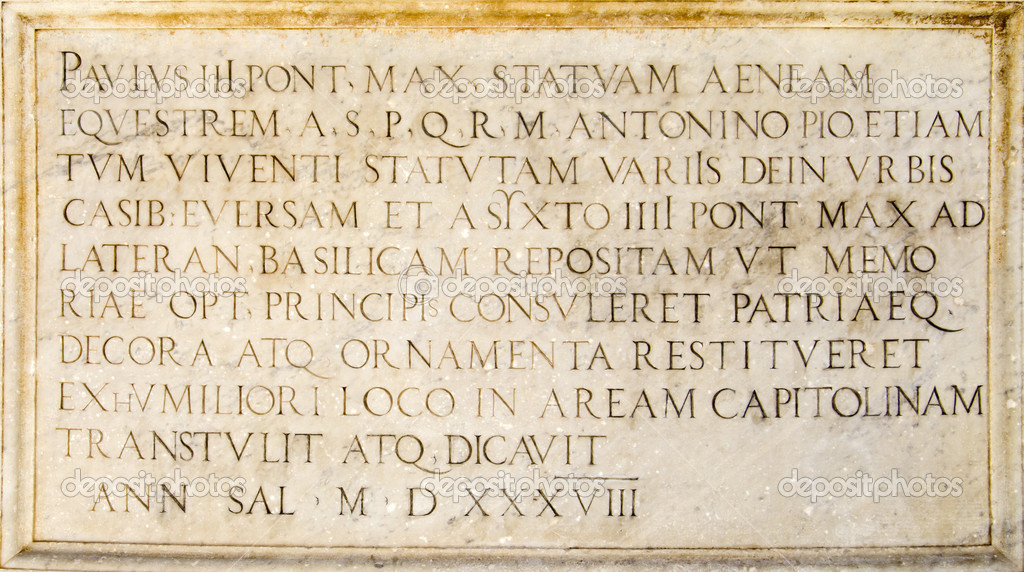
Classical Latin Script. Source
The Ancient Romans spoke many different languages, but early Romans would have primarily used Classical Latin for all official business. The lower classes may have also spoken Vulgar Latin, a simplified form of the original. Latin was heavily influenced by Greek and other Italic Languages (see the map below). In fact, wealthy upper-class romans would have spoken both Ancient Greek and Classical Latin.

Latin was influenced by some of the other Italic Languages. It shares many characteristics with these which were different from the Gaulish, Greek and Etruscan Languages. Source
The Romans would have also spoken a particular language based on the region of Italy they came from (as shown above). As the empire expanded, so did the variety of languages spoken. Gaulish dialects (France), Coptic languages (Egypt), Punic languages (North Africa) etc. all continued to be spoken by individuals from those specific regions in addition to Latin and Greek. Therefore is was common for people to be fluent in three different languages. The influence of Latin and Greek on these regional dialects became evident as the region became politically fragmented and the languages became once more distinct from one other.

Map of the Romance Languages in Europe today which were influenced by Vulgar Latin. They primarily exist in areas which were under the direct political control of the Western Roman Empire. Romanian is the exception here, developing in the Eastern Roman Empire. Source
The Romance languages, including early French, Romanian, Spanish, Portuguese and Italian, were being developed near the fall of Western Roman Empire in the 4th and 5th century C.E.

Sources:
https://www.britannica.com/topic/Romance-languages
https://www.britannica.com/topic/Italic-languages
https://www.britannica.com/topic/Latin-language

What is a Palindrome?

Examples of two palindromes. Courtesy of Berkley University.
A palindrome is a word which reads the same way in the forward direction as in the backwards direction. This means that if you arrange the words from left to right, then it will be the same word when you arrange it right to left. Here is a visual example using the words in the example above this.

Left to Right: radar

Right to Left: radar

Left to Right: submarine

Right to Left: enirambus

Notice that the second word does not make sense when you flip it. This distinguishes palindrome words from their other vocabulary. Other common examples include racecar, eye and level.

"Racecar" is also considered a palindrome.
This concept is also applied to other ideas. For example, sentences or phrases can be considered palindromes. Here you aren't flipping each individual word, but the entire phrase. Spellcheck is trying to correct my "racecar" to "race car", which then serves as an example of this concept with "phrases" instead of words.

The Phrase read left to right: race car

The Phrase read right to left: race car

Each word in the phrase read left to right: race car

Each word in the phrase read right to left: ecar rac

Even though the original definition does not apply (where the words are flipped), the idea is that you can describe the entire phrase as a palindrome, and that this is a concept which can be applied to different concepts depending on how you interpret these. It has become a popular programming exercise, with many introductory coding courses including at least one activity dedicated to checking for palindromes. It has also been applied to dates, genetic codes, and other fields where language is involved. Palindrome's are fun and make reconstructing portions of language or code easier because of the simplistic rules which govern them.
Palindrome "Dates"
Thank you for reading this post. If you enjoyed seeing some of these examples, then you might like this website, which is dedicated to finding and organizing different palindromes.